
Portuguese Bread Rolls Recipe, Just 4 Ingredients!
These Portuguese Bread Rolls Recipe will help you make the best artisan bread rolls with crispy crust and soft, moist crumb in an easy no knead method; using just flour, water salt and yeast.
If you’ve ever traveled to Portugal—or even walked into a Portuguese bakery—you might have come across papo secos, the humble yet iconic Portuguese bread rolls.
These rolls are crusty on the outside, soft, moist and airy on the inside, and ridiculously versatile.
From breakfast to dinner, they’re the go-to roll for sandwiches, dunking in soup, or simply enjoying warm with butter.
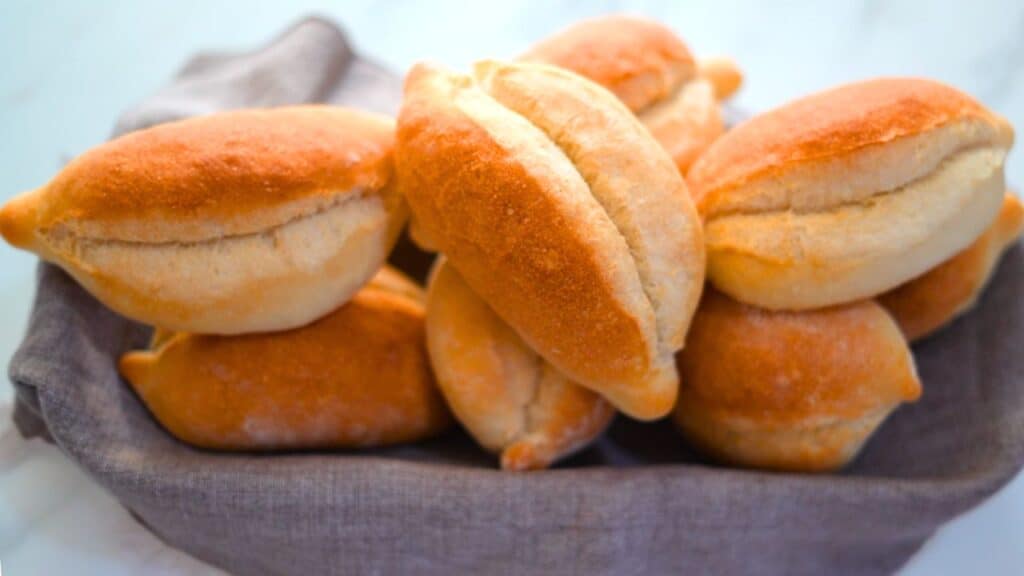
The best part? You don’t need fancy equipment, you don’t need to knead, and you only need four everyday ingredients: flour, water, yeast, and salt. That’s it. Just four things you probably already have in your kitchen right now.
So, if you’re ready to bake bread that looks and tastes like it came from a Portuguese bakery but is effortless enough for a beginner, papo secos will quickly become your new favorite recipe.
This Portuguese bread rolls recipe is adapted from our Artisan Ciabatta Recipe which is one of the reader's most favorite bread recipes.
Why You’ll Love This Crusty Portuguese Bread Rolls Recipe
Let’s be honest—bread baking can feel intimidating at times. But not with this one. Here’s why this recipe is special:
- Few ingredients – Just flour, water, yeast, and salt.
- No kneading required – The dough comes together with a spoon and a few folds.
- Simple technique – No stand mixers, no bread machines. Just a bowl, a spoon, and your hands.
- Authentic results – Golden crust, airy crumb, and that unmistakable Portuguese flavor.
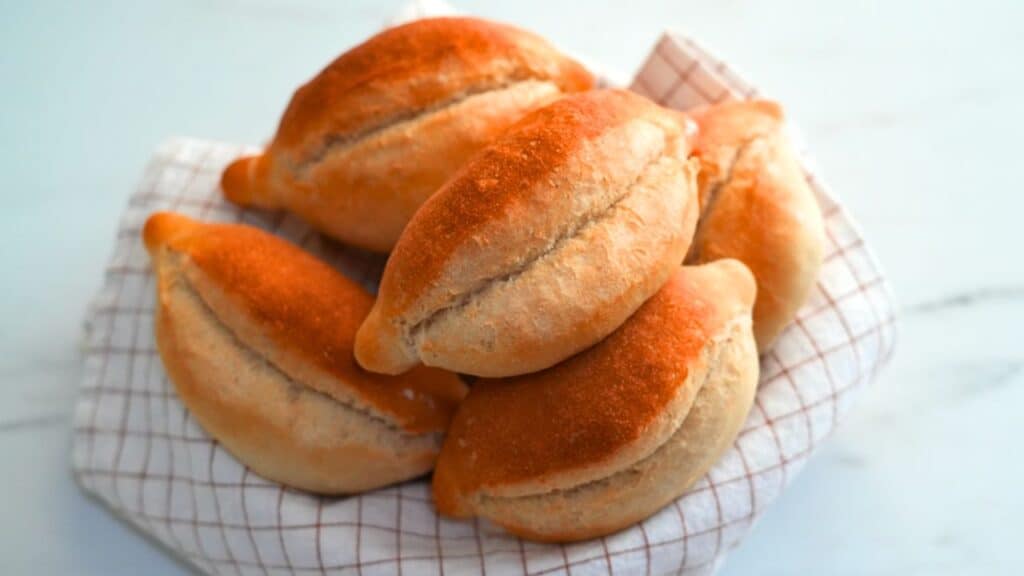
What You’ll Need To make this Rustic Portuguese Bread Rolls
Ingredients (for 6 rolls):
- All-purpose flour or Bread Flour : 350 g or 2.5 cups(loosely packed) + 3 tbsp
- Water: 260 ml or 1 cup +1.5 tablespoon (room temperature)
- Salt :1 teaspoon (about 6 g)
- Instant Yeast :1 teaspoon (about 3 g)
That’s it. No oil, no sugar, no milk. The beauty of Portuguese rolls lies in their simplicity.
I measure my ingredients using a weighing scale as it gives consistent results. (The weight of 1 cup of flour when loosely packed and tightly packed may vary by around 20 g).
Step-by-Step: How to Make Portuguese Bread Rolls (Papo Secos)
Step 1: Prepare the Dough
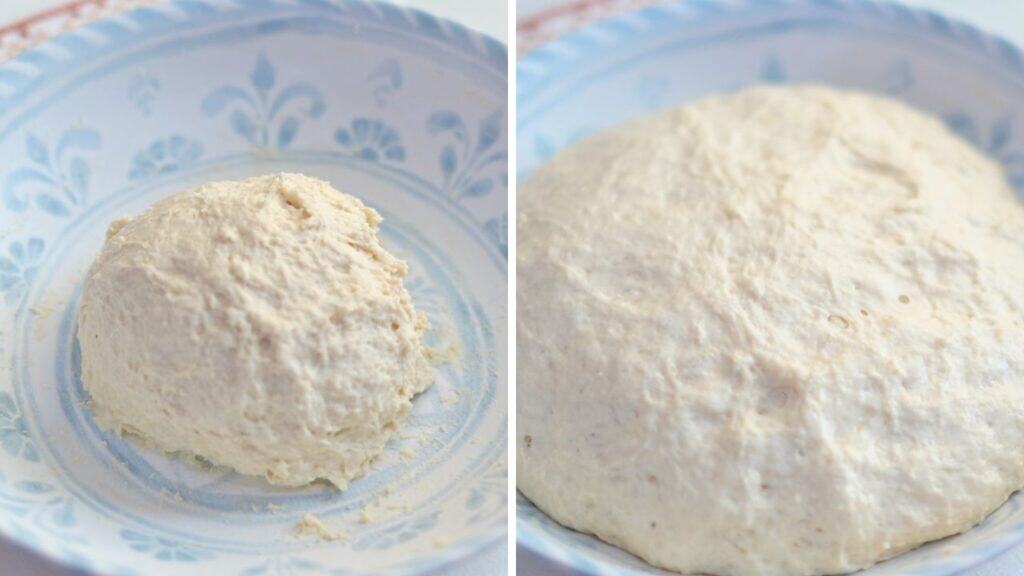
In a large bowl, pour in the water. Add the salt and yeast and stir until both dissolve.
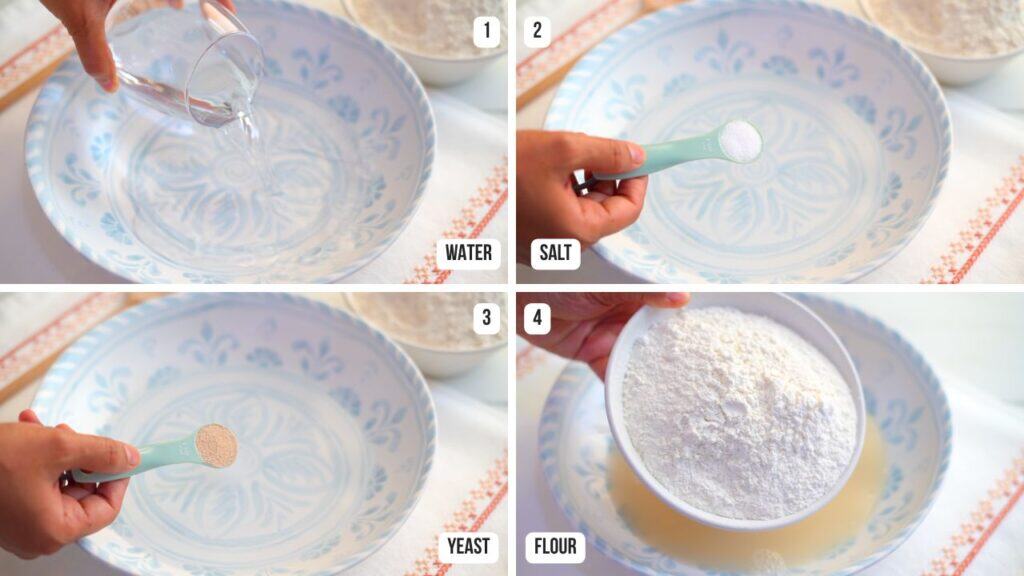
Add the flour on top. Mix until the dough forms a shaggy mass. I have used the rear end of a wooden spoon to mix the dough.
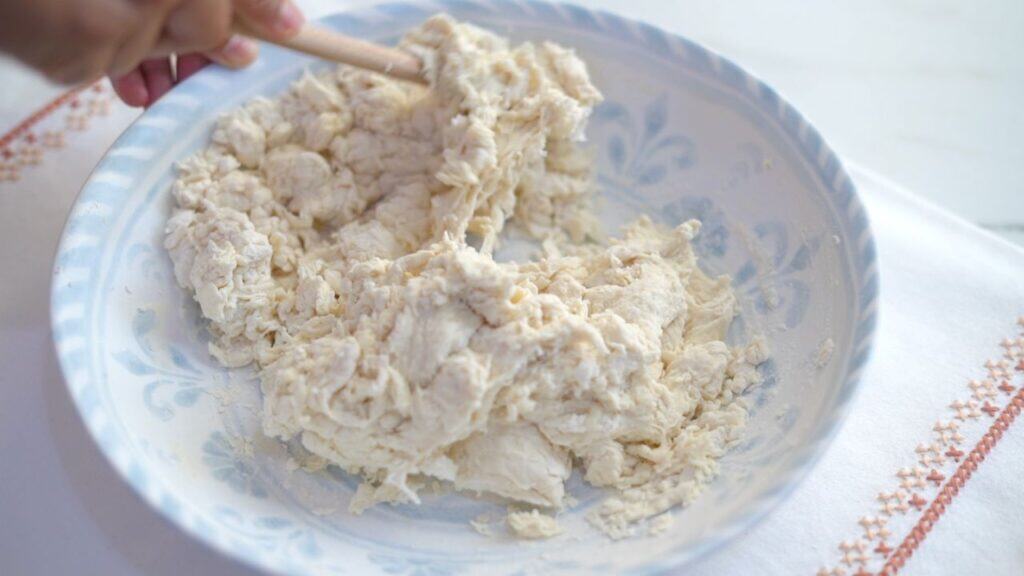
To make sure there are no dry patches, use your hands for the final mix. Just one minute of gentle mixing and a few “slap and folds” are enough. Our dough should be smooth and homogenous.
Tip: The dough will feel sticky, and that’s perfectly fine. Resist the urge to add more flour.
Step 2: First Rise (Proof the Dough)
Cover the bowl with a clean towel or plastic wrap. Let it rest in a warm spot for 1.5 to 2 hours. The dough should roughly double in size and feel airy. It will take 90 minutes in a warm environment while 2 hours in a very cold environment.
Step 3: Divide and Shape the Rolls
Gently degas the dough by pressing it down and form into a large ball of dough.
Divide it into 6 equal portions.
Shape each portion into a small ball: tuck the edges into the center, flip, and roll until smooth and round.
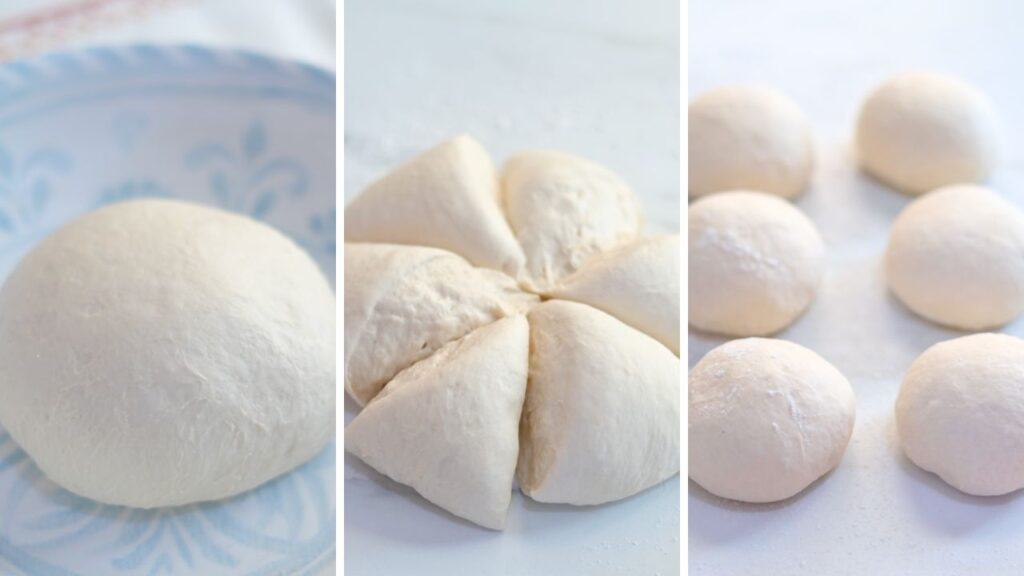
Cover with a damp towel and let the balls rest for 4-5 minutes. This short rest relaxes the gluten and makes shaping easier.
Now, the fun shaping part:
Place the dough ball on a lightly floured surface, smooth side facing down.
Flatten into a circle with your hand.
Using a wooden spoon or using the side of your palm, press firmly along the center to make a deep crease.
Pull each end of the crease outward, gently stretching into an oval.
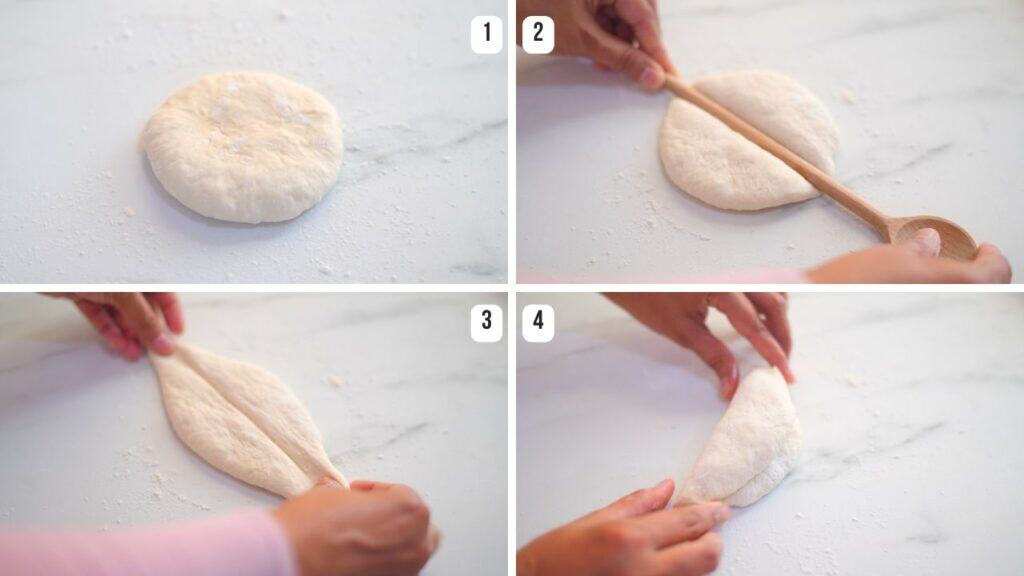
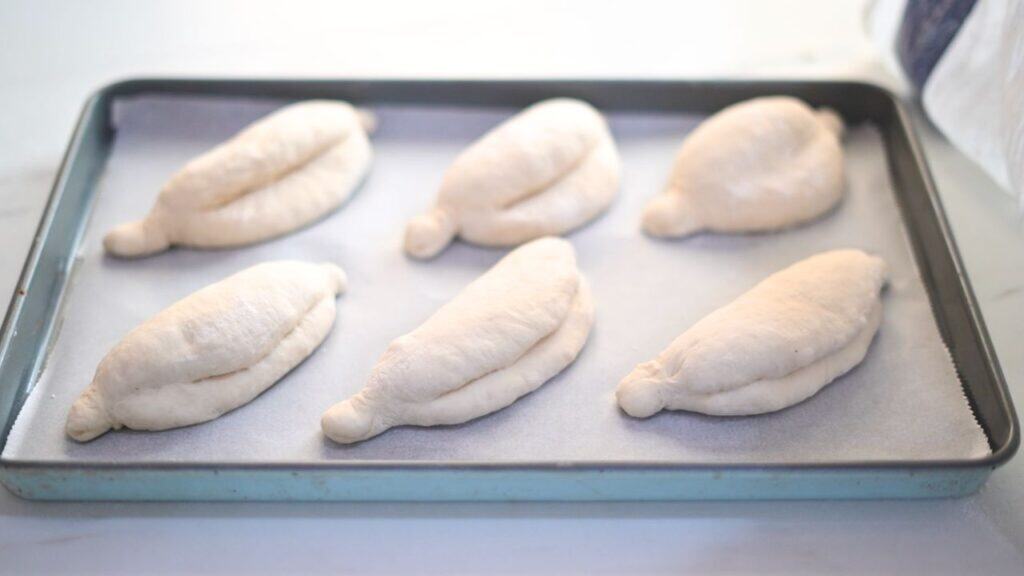
Fold the oval in half along the crease, then twist the ends to form two points.
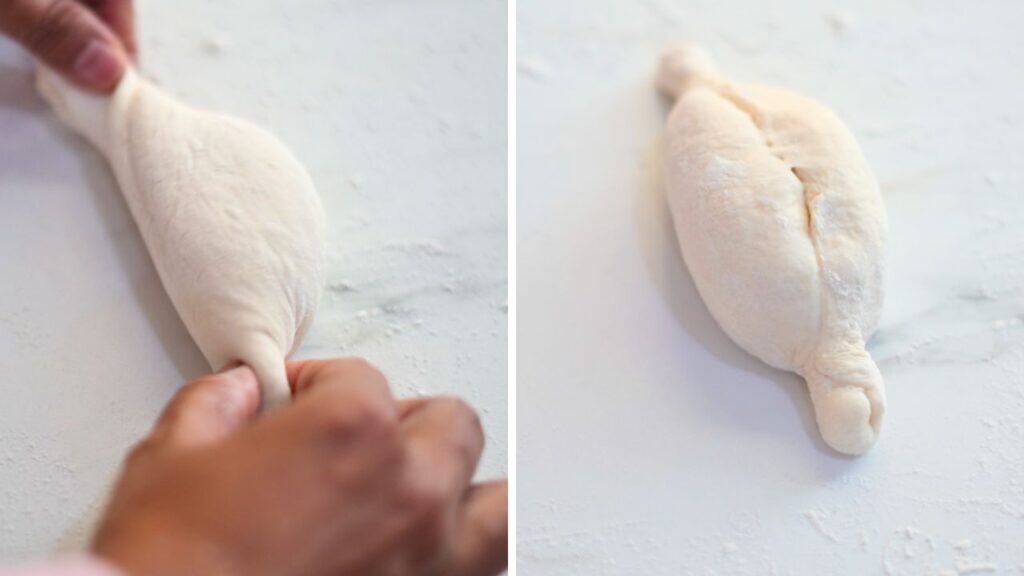
Now place them on a parchment lined baking sheet
Step 4: Second Rise (Final Proofing)
- Cover the shaped rolls and let them rest in a warm spot for about 35-45 minutes. They will rise well in about 35 minutes in a warm spot and may take around 45 minutes in a colder environment. We don't want the rolls to get over-proofed, otherwise they will not be able to rise beautifully while baking.
Step 5: Bake the Rolls
The Secret for making Crusty Bread Rolls is to bake them at a very high heat in a steamy environment for the first 8-10 minutes of baking. This will help the rolls to rise to their fullest.
- Preheat your oven to 250°C (480°F).
- Place the baking tray with rolls inside
- Create steam inside the oven—this is key for that signature crust. You can:
- Spray water generously inside the oven while you place the baking tray inside the oven for baking Or
- Place a tray of boiling water on the bottom rack of the oven during the first 8 minutes of baking.
- Bake for 8 minutes at 250°C (480°F).
- After 8 minutes, Reduce the temperature to 220°C (420°F) and bake for another 10-12 minutes.
When done, the rolls should be golden brown, crusty on the outside, and hollow-sounding when tapped.
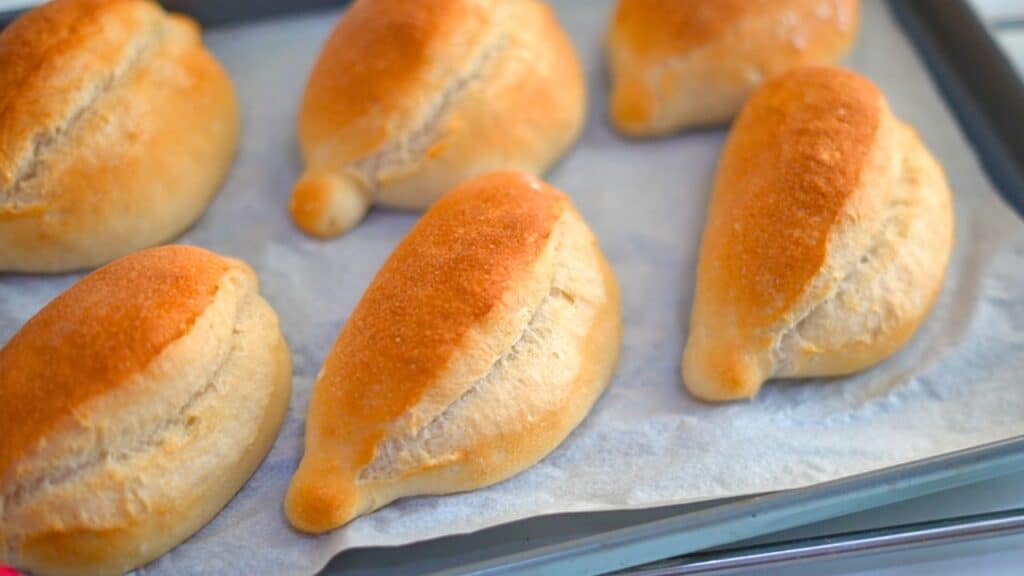
Transfer to a cooling rack and let them cool down a few minutes.
These Portuguese bread rolls are best to have while they are fresh and warm out of the oven.
VIDEO:How to make Crusty Portuguese Bread Rolls at home
Best Ways to Serve Papo Secos
This is where the magic really happens. These rolls are a blank canvas for so many delicious pairings:
- Classic Portuguese Sandwiches – Split and stuff with roasted pork (bifanas) or marinated beef (prego).
- Breakfast Rolls – Warm with butter and jam, or filled with scrambled eggs.
- Soups and Stews – Perfect for dipping into caldo verde (Portuguese kale soup).
- Simple Snack – A drizzle of olive oil and a sprinkle of sea salt is heavenly.
- Grilled Cheese Style – Add cheese and ham, press lightly, and toast until melty.
Storing and Reheating
Like most artisan breads, papo secos are best eaten fresh the same day. But if you have leftovers:
- Storage: Keep them in a paper bag or bread box at room temperature for up to 2 days. For longer storage, freeze them in an airtight bag for up to a month.
- Reheating: To bring back the crustiness, Spray the rolls with some water and pop them in a preheated oven at 180°C (350°F) for about 5–7 minutes. If frozen, thaw at room temperature first, then reheat.
Enjoy the best Crusty Bread Rolls
Papo secos are proof that the simplest recipes can bring the most joy. With just four ingredients and a bit of patience, you can create bakery-quality Portuguese bread rolls right in your own kitchen.
Their crispy crust, soft crumb, and endless serving possibilities make them a staple worth baking again and again. Plus, the satisfaction of pulling a tray of golden rolls out of your oven? Absolutely priceless.
So next time you’re craving fresh bread, skip the store-bought stuff. Flour, water, yeast, and salt are all you need to bring the taste of Portugal to your table.
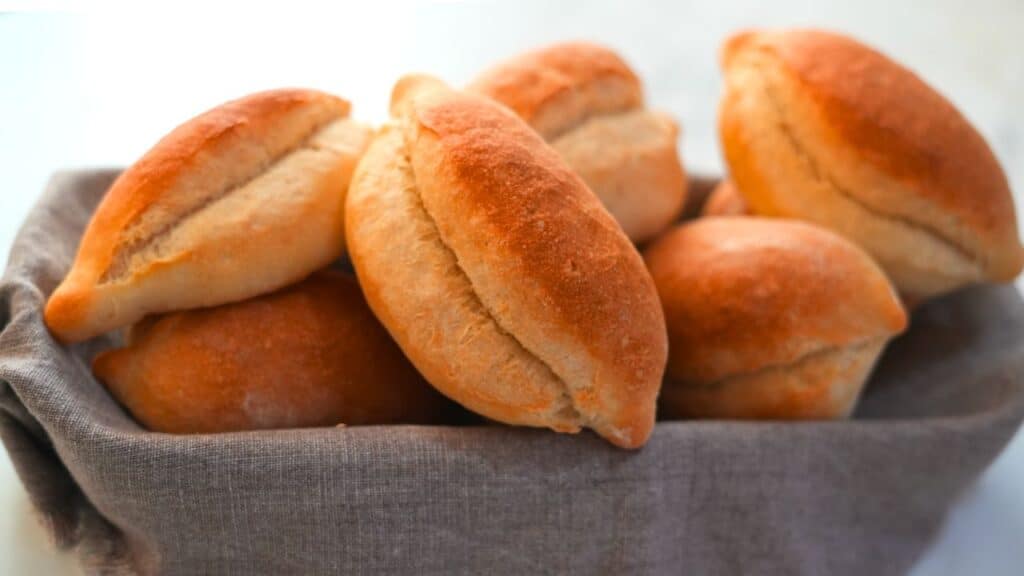
Go ahead—try this recipe once, and you’ll understand why these humble rolls are loved by so many. Bom apetite!
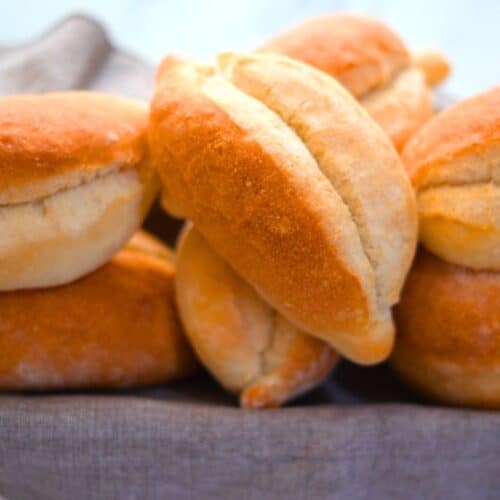
Portuguese Bread Rolls Recipe!
Equipment
Ingredients
- 350 g All purpose flour/Bread flour 2.5 cups loosely packed + 3 tbsp
- 260 ml Water 1 cup +1.5 tablespoon (at room temperature)
- 6 g Salt 1 tsp
- 3 g Instant Yeast 1 teaspoon or 1.25 teaspoon active dry yeast
Instructions
Prepare the Dough
- In a large bowl, pour in the water. Add the salt and yeast and stir until both dissolve.
- Add the flour on top. Mix until the dough forms a shaggy mass.
- To make sure there are no dry patches, use your hands for the final mix. Just one minute of gentle mixing and a few “slap and folds” are enough. Our dough should be smooth and homogenous.
First Rise
- Cover the bowl with a clean towel or plastic wrap. Let it rest in a warm spot for 1.5 to 2 hours. The dough should roughly double in size and feel airy. It will take 90 minutes in a warm environment while 2 hours in a very cold environment.
Divide the Rolls
- Gently degas the dough by pressing it down and form into a large ball of dough.
- Divide it into 6 equal portions.
- Shape each portion into a small ball: tuck the edges into the center, flip, and roll until smooth and round.
- Cover with a damp towel and let the balls rest for 4-5 minutes. This short rest relaxes the gluten and makes shaping easier.
Shape the rolls
- Place the dough ball on a lightly floured surface, smooth side facing down.
- Flatten into a circle with your hand.
- Using the handle of a wooden spoon or using the side of your palm, press firmly along the center to make a deep crease.
- Pull each end of the crease outward, gently stretching into an oval.
- Fold the oval in half along the crease, then twist the ends to form two points.
- Now place them on a parchment lined baking sheet
Second Rise
- Cover the shaped rolls and let them rest in a warm spot for about 35-45 minutes. They will rise well in about 35 minutes in a warm spot and may take around 45 minutes in a colder environment.
Bake the Bread Rolls
- Preheat your oven to 250°C (480°F).
- Place the baking tray with rolls inside.
- Create steam inside the oven—this is key for that signature crust. You can:Spray water generously inside the oven while you place the baking tray inside the oven for baking Or Place a tray of boiling water on the bottom rack of the oven during the first 8 minutes of baking.
- Bake for 8 minutes at 250°C (480°F).
- After 8 minutes, Reduce the temperature to 220°C (420°F) and bake for another 10-12 minutes or until the rolls are deep golden in color.
- Transfer to a cooling rack and let them cool down a few minutes.
- Enjoy them while they are fresh and warm.

I wrote a comment in regards to the risen dough. It does not go smooth no matter what I did hence I could not smooth it out to firm into a ball to shape it. Hence I ended up cut them into six and tried to shape it in a ball and flatten . Baked it per directions and the bread came out ok but very pale. It tasted okey. Not sure what Indid wrong.
I'd tried this once, and I think I forgot to comment. Came across it today when I was looking for a no-knead recipe for crusty rolls, and made them again. Soooo good! Thank you!
Thank you so much! 😊 I’m so happy you came back to this recipe and enjoyed it again. It means a lot that you took the time to leave a comment. So glad the rolls turned out great for you!